
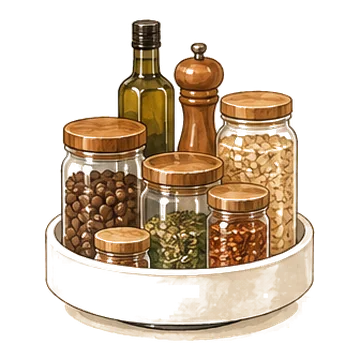
OXO Good Grips 16 inch lazy Susan turntable
A 16 inch turntable for oils, spices or fridge jars.
Check priceOn a small counter, every toaster, crock and bottle of dish soap takes space you need for chopping. This guide shows how much clear space to protect, what earns a spot on the counter, and how to move the rest onto the wall, into the corners or over the sink.
As an Amazon Associate I earn from qualifying purchases. Links on this page are affiliate links: if you buy through them, I may earn a small commission at no extra cost to you.

Part of our guide: Small Kitchen Organization Ideas: A Zone-by-Zone Plan →
A small counter stays usable when it holds only what you use every day, grouped into a few stations, with one stretch of surface that is never used for storage at all. Everything else moves up onto the wall, into a cabinet or onto a cart.
The first pass takes about an hour: clear everything off, wipe down, then put back only what passes the daily test. Adding wall storage and a shelf or two is a second, weekend-sized job.
Standard base cabinets put the counter at about 36 inches high and 25 inches deep, with upper cabinets usually hanging about 18 inches above it. That 18 inch gap is the ceiling for anything you keep on the counter, so measure it before you buy a canister set or a tiered shelf.
Kitchen planners often aim for about 36 inches of continuous clear counter for prep. Many small kitchens simply do not have it. Aim instead for one strip at least 24 inches wide that you never park anything on, ideally between the sink and the stove so food moves from rinsing to chopping to the pan in a straight line.
Then look at the landing spots. You want a bit of open counter beside the fridge to set groceries down, beside the stove to rest a hot pan, and next to the sink for dirty dishes. If those spots are full, every task turns into shuffling.
Run the audit below once. It shows what is actually using your counter, and the answer is usually not what you expect.

Small appliances take the most counter space, and they are the easiest win. Use a simple rule: an appliance stays out only if you use it most days. The coffee maker usually passes. The stand mixer, the slow cooker and the waffle maker usually do not.
Appliances you use weekly go in the most reachable lower cabinet, near an outlet if possible. A cabinet just below the counter means lifting them only a short distance. Appliances you use a few times a year can live on a high shelf, in a closet or on a cart in another room.
If two appliances do the same job, keep one. A toaster oven can cover the toaster, and a multi-cooker can cover the rice cooker and the slow cooker.
Heat matters too. Toasters, toaster ovens and air fryers vent hot air, so follow the clearance guidance in the manual and slide them out from under the upper cabinets while they run. Wrap cords with a reusable tie so a stored appliance does not trail cable across the counter.
Loose items make a counter look full even when there are only a few of them. Grouping them into two or three stations makes the same things look planned, and it makes wiping down far faster because you lift a tray instead of ten bottles.
A cooking station sits beside the stove: oils, vinegar, salt, pepper and a utensil crock. A 16 inch turntable such as the OXO Good Grips 16 inch lazy Susan turntable keeps the bottles in one round footprint and spins so the back one is never out of reach.
A sink station holds dish soap, a sponge and a brush. A small organizer like the sink caddy with sponge and brush holder keeps them off the counter and off the sink edge, where wet sponges otherwise leave marks.
A coffee or tea station gathers the machine, mugs and supplies into one corner. If yours keeps spreading, the coffee bar guides on this site go deeper into small setups.
Keep each station to its own footprint. A tray, a board or a turntable draws the boundary, and anything that lands outside it goes back where it belongs.
The corner where two counters meet is hard to use for prep because you cannot stand square to it, which makes it the best place on the counter for storage. Put tall or stacked items there and keep the open runs for working.
A two-level shelf doubles the usable surface in that footprint. The Simple Houseware expandable stackable counter shelf adjusts in width and stacks, so a corner can hold canisters underneath and spices or a small plant on top. Check its height against the gap below your upper cabinets before you buy.
Matching jars or canisters make a corner look intentional, but keep them to what you reach for weekly. A row of decorative canisters you never open is still clutter.
Keep heavy things low. A tiered shelf is for spices, jars and small bowls, not a cast iron pan or a stack of plates.

The strip of wall between the counter and the upper cabinets is the most underused storage in a small kitchen. Anything hung there is reachable from the prep strip and takes up no counter depth at all.
Knives are the first thing to move. A knife block can take more counter space than you would guess, and a wall strip like the HOSHANHO 16 inch magnetic knife strip holds a full set flat against the wall. Mount it high enough that the handles clear the counter and away from the edge of the stove.
A rail with S-hooks holds ladles, whisks and a pair of mitts. A small shelf can hold spices in a single row where you can read every label. Keep the zone right behind the stove clear of anything that could catch heat or splatter.
If you rent and cannot drill, see the guide to kitchen storage ideas for renters for no-drill options that come off cleanly.
The dish rack is often the single biggest thing on a small counter. You have two ways to shrink it: go smaller, or go over the sink.
A smaller rack such as the compact dish drying rack has an 11 x 15 inch footprint and a rotating spout that drains into the sink, so it fits a narrow strip beside the basin. For a family that washes a lot by hand, it may fill fast, so pair it with drying as you go.
An over-the-sink rack lifts drying off the counter entirely. The ADBIU expandable 2-tier over-the-sink dish rack adjusts in height and length to fit across the basin. Measure the sink's outside width and the height up to the window or upper cabinet before ordering, and make sure the faucet can still swing.
Whichever you choose, empty it after each round of dishes. A rack that turns into permanent storage for the same six plates defeats the purpose.

The bottom of the upper cabinets is a ceiling you can hang things from. A paper towel roll on the counter takes a circle of space right where you prep. The DEKAVA self-adhesive under-cabinet paper towel holder sticks underneath, so the roll hangs where you can tear one handed.
Light helps more than it seems. A dark corner of the counter tends to collect clutter because nobody works there. The MCGOR rechargeable under-cabinet lights, 2 pack attach magnetically with no wiring and turn on with motion, which can make a dim strip of counter usable again.
Keep hanging items light and away from the stove. A paper towel roll near a burner is a fire risk, so place it closer to the sink than to the cooktop.
Most of the space you gain on a small counter comes from the free step: moving things off it. Spend after that, and only on what still crowds you.
Start with the station that bothers you most, usually the sink or the stove, and finish it before moving on.
Counters fill back up because they are flat and in the middle of everything. Mail, bags, keys and groceries land there on the way somewhere else. Give those things a home outside the kitchen, such as a hook and a tray by the door, and the counter stays clear for cooking.
End each evening by returning everything outside a station to its home and wiping the prep strip. It takes a few minutes and starts the next day with a working counter.
A 16 inch turntable for oils, spices or fridge jars.
Check price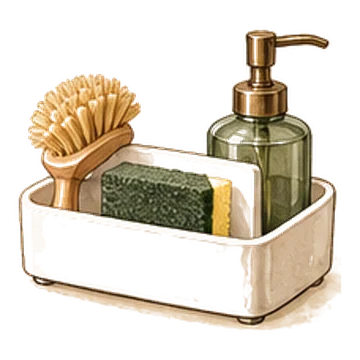
A small sink organizer that keeps the sponge, brush and soap off the counter.
Check price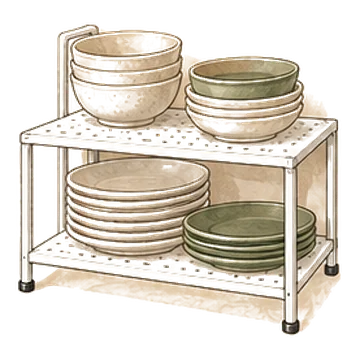
An expandable shelf that doubles cabinet or counter space with a second level.
Check price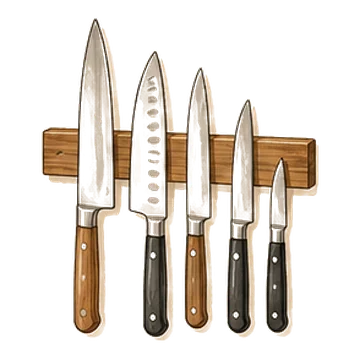
A 16 inch magnetic strip that moves knives off the counter and onto the wall.
Check price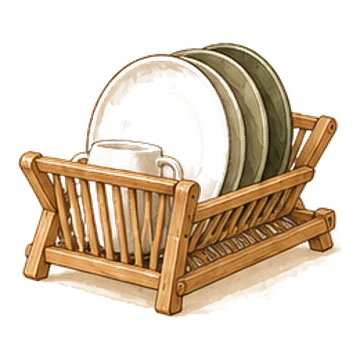
A small-footprint drying rack with a rotating spout that fits tight counters.
Check price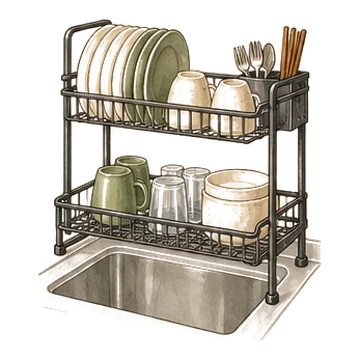
An expandable two-tier rack that sits over the sink and frees the counter.
Check price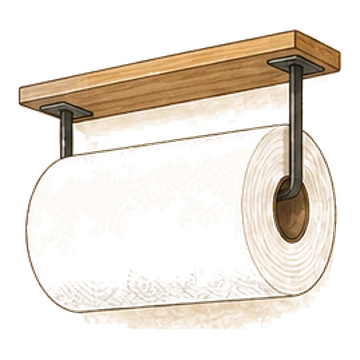
A stainless paper towel holder that sticks under a cabinet, no drilling.
Check price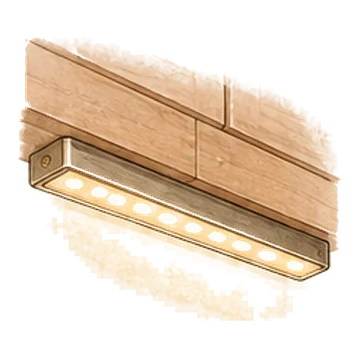
Two magnetic, motion-sensor LED bars that light a dark counter corner with no wiring.
Check priceClear it completely, keep a prep strip empty, return only daily items and group them into stations on trays. Move everything else to cabinets, the wall or a cart.
Appliances you use less than weekly, knife blocks if you can hang a strip instead, mail, bags and keys, and decorative items that take prep space.
Kitchen planners often aim for about 36 inches of continuous prep space. In a small kitchen, keep at least a 24 inch strip clear, ideally between the sink and stove.
Keep daily appliances on the counter. Store weekly ones in the most reachable lower cabinet and rarely used ones on a high shelf, in a closet or on a cart.
Group items on trays or turntables so each station has a clear footprint, use lidded canisters for loose items and move knives and paper towels to the wall or under the cabinets.
It can be, because it moves drying off the counter. Measure the sink's outside width and the height to the window or cabinet first, and check the faucet can still move.


