
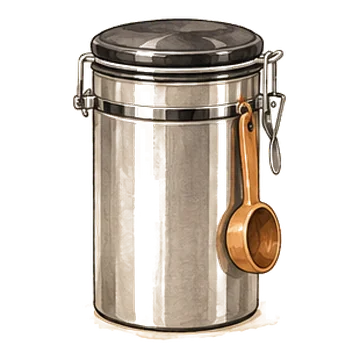
Veken airtight stainless coffee canister with window, 22 oz
An airtight stainless steel canister with a small window to see how much coffee is left.
Check priceA good coffee bar is mostly decisions, not purchases. This guide starts with what you already own, then lays out a low, medium and splurge plan so you know what to add next, where to save, where spending a little more pays off, and how to make a thrifted piece look intentional.
As an Amazon Associate I earn from qualifying purchases. Links on this page are affiliate links: if you buy through them, I may earn a small commission at no extra cost to you.

Part of our guide: Coffee Bar Ideas for Small Spaces: Layouts That Fit →
Spend in this order: first on nothing, by shopping your own house; then on the one piece that fixes your biggest problem, like no counter or no storage; and only then on looks. Most coffee bars that end up costing too much skipped the first step.
A budget coffee bar still needs the same basics as any other: a spot near an outlet, a way to keep coffee fresh, a place for mugs and something underneath to catch drips. None of those has to be new.
Before buying anything, walk through your home with a laundry basket and collect anything that could work. It takes about 30 minutes, and most people find more than half of what they need.
Look beyond the kitchen. A nightstand, a small bookshelf, a bar cart, a side table or a dresser from a guest room can all hold a brewer. Serving trays, wooden boards and baking sheets make good bases. Jam jars, spice jars and small bowls hold sugar and stirrers.
Think of a coffee bar as something you build in layers. Each tier below works on its own, so you can stop at any point and still have a bar that works every morning.
Low means using what you have and adding only small consumables, like labels or a few jars. Medium means one storage piece that solves a real space problem. Splurge means furniture and finishing touches that make the corner look built in.
To tell which tier you need, look at your mornings. If they already run smoothly and the corner just looks messy, stay low and spend your effort on editing. If you are out of surfaces, the medium tier fixes that. The splurge tier makes sense when the bar is also a focal point, like a dining room hutch guests will see.
Save on anything decorative. Signs, seasonal accents, matching bins and printed menus are the easiest things to find secondhand, make yourself or skip entirely, and they are the first things you will want to change.
Spend where daily use or safety is involved. Coffee keeps best in an airtight, opaque container away from heat and light, so a proper canister such as the Veken airtight stainless coffee canister with window, 22 oz is worth having even when everything else is thrifted. Its small window shows how much is left without opening it.
Hardware is the other place not to cut corners. Anything that hangs on a wall and holds mugs should be screwed into studs or into anchors rated for the weight. A cheap bracket that lets go takes the mugs with it.
Finally, do not pay for storage you do not need yet. A two-tier shelf is only a good buy if your counter is already full. If it is not, the shelf just adds things to dust.
Thrift stores, yard sales and local buy-and-sell listings are where a budget coffee bar gets its main piece. Small dressers, nightstands, hutches, bar carts and bookcases turn up often, and solid wood ones are easy to clean, paint or seal.
Shop with your measurements in hand, including the width of your spot and the height of your brewer with the lid open. A piece about 30 to 36 inches tall puts the brewer at a comfortable height.
A chipped or dated finish is fine if the structure is sound, since paint is the easy part. Pass on anything that smells strongly of smoke or mildew, which is hard to get out of wood and drawers.

If shopping your house leaves one clear gap, these two pieces solve the most common ones without a big project.
For a kitchen with no free counter, a cart is the most useful single purchase. The Amazon Basics 3-tier rolling cart with lockable wheels holds the brewer on top and supplies below and can roll a coffee setup to wherever there is room. It also follows you to the next home.
For a counter that is already crowded, go up instead of out. The Giikin 2-tier wooden coffee station organizer stacks coffee supplies on a second level, so pods, sugar and syrups stop spreading across the counter. Put the heaviest items on the lower tier.
For more ideas on making a crowded corner work, see coffee station without counter space and our coffee bar ideas for small spaces guide.
A coffee bar looks expensive when it looks consistent, not when it is full. These free or nearly free moves do the most.
Mugs are the easiest place to start because they are already in the cabinet. A countertop mug tree like the MyLifeUNIT mug holder tree, 6 hooks puts six of them on display and frees a whole cabinet shelf, which is a budget win twice over. If you would rather hang them on the wall, the Mkono wall-mounted mug holder with 10 hooks, 2 pack holds a full set across two racks.
Cords are the detail that most often makes a budget bar look unfinished. Run them straight down behind the furniture and gather the slack with a twist tie or a reusable cable strap.

Glass jars are one of the cheapest ways to make a coffee bar look tidy. Ball wide-mouth mason jars with their lids and bands work well for sugar, stirrers, tea bags, cocoa mix and cookies, and the wide mouth fits a scoop.
Mismatched jars still look intentional if the lids match, or if each jar holds something of a similar color, like white sugar, white stirrers and pale tea bags.
Clear jars are not the best home for coffee itself. Light and air both dull coffee over time, so beans and grounds keep better in an opaque, airtight canister. Keep the clear jars for everything else and let the coffee canister be the one thing that does not match.
Store backup coffee in its original sealed bag in a cool, dark cabinet, and refill the canister from it once or twice a week. Keeping the bar to a week's supply also keeps it from looking cluttered.
This is the most common budget project, and it takes about three to four hours including paint drying, less if you skip the paint. Work on a drop cloth in a ventilated room.
Once it is in place, the top holds the brewer on a tray, the middle shelf holds mugs and jars, and the bottom shelf or drawer holds backups. Under-cabinet style rechargeable lights such as the MCGOR rechargeable under-cabinet lights, 2 pack attach magnetically with no wiring and can light a shelf that sits in a dark corner.

Most budget coffee bars go over budget the same few ways. Avoid these and the bar stays both cheap and useful.
Watch for small purchases that add up, too. Three inexpensive organizers that each almost work often cost more, together, than one piece that actually fits.
An airtight stainless steel canister with a small window to see how much coffee is left.
Check price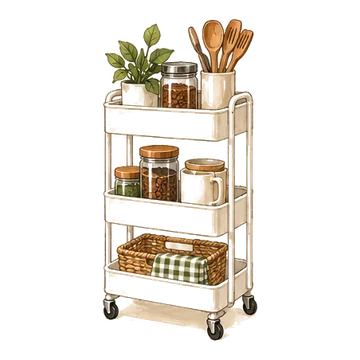
A metal three-tier cart on lockable wheels that rolls a coffee setup wherever there is room.
Check price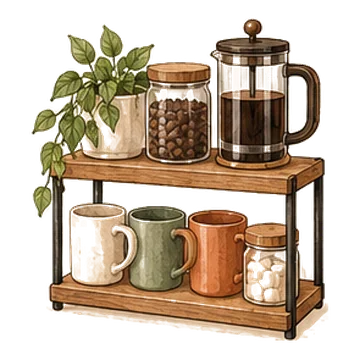
A two-tier wood shelf that stacks coffee supplies on the counter.
Check price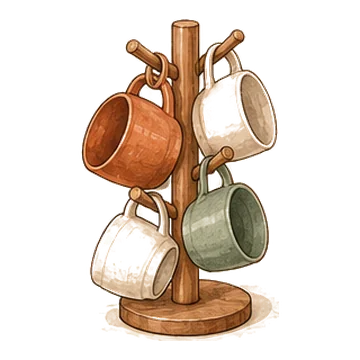
A black mug tree with six hooks that frees up a whole cabinet shelf.
Check price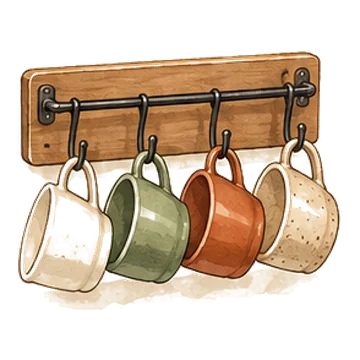
Two wall racks with 10 hooks total for hanging coffee cups.
Check price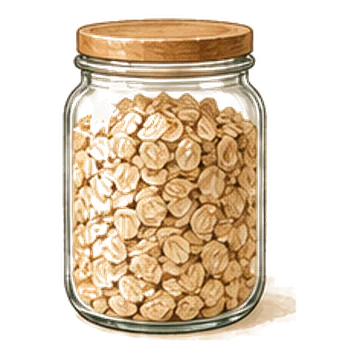
Wide-mouth glass jars with lids and bands, for pantry staples, overnight oats or homemade jam.
Check price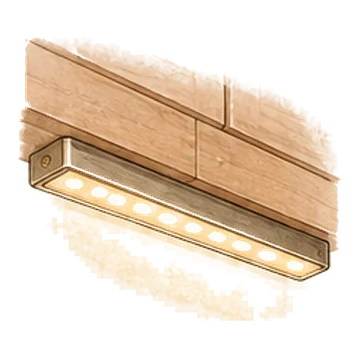
Two magnetic, motion-sensor LED bars that light a dark counter corner with no wiring.
Check priceStart by shopping your house for a tray, jars, mugs and a small piece of furniture near an outlet. Then buy only the one thing daily use shows you are missing, such as an airtight canister or a cart.
Put the brewer you already own on a tray, add a jar for sugar and a cup for spoons, and keep two or three mugs beside it. That is a working coffee bar with nothing new.
A brewer, an airtight container for coffee, a few mugs, spoons, a container for sugar or sweetener and a tray or mat to catch drips. Everything else is optional.
It is if you have no free counter, since a cart adds a surface where none existed and moves with you. If you already have a clear counter corner, a tray and a shelf usually do the job.
Clear jars let light reach the coffee, and air and light dull it over time. An opaque, airtight canister is a better choice for coffee, while clear jars work well for sugar, tea and stirrers.
A small dresser, nightstand, bookcase, hutch, sideboard or bar cart all work if they are sturdy, near an outlet and roughly 30 to 36 inches tall.


